Beyond Personal Exhaustion: exploring the Spiritual, Existential, and Collective Dimensions of Burnout

But First, A Note on Approach
A colleague gave us a pérsimo (persimmon). She warned me: this one you have to wait until it’s really ripe then you’re ready to eat. My mom thought it was ready, bit into it, grimaced, and immediately had to rinse her mouth. The fruit wasn’t ready to be consumed.
I've been thinking about this as I write for people burned out on being told to consume the next wellness trend, the next solution, the next optimization. For those tired of toxic positivity, “cruel optimism,” one-size-fits-all advice, and being sold fantasies that ask people to individually solve our way out of collective crisis. For those who've been oversold and overpromised by many industries that profit from our exhaustion.
Moving forward I’d like what I share to be like this fruit my friend gave me. I’ve tried to rush things and they just haven’t been ready. I’m finding on this site I’d like to be more slow with what I put out into the world. There are probably many reasons for this. I’m welcoming them all. I want to take time.
I feel more aligned even if things are imperfect when I take the time I need even if that doesn’t go with the inhumanly-super-fast-paced world I find myself swimming in. In essence, I might go fast one season if called to be, slow another, and a different speed another. This feels relevant to a series on burnout. Essentially, I’m trying to find out and experiment with what’s sustainable for me.

Doing things differently
With this in mind, something else I might do differently is you might notice I talk about traits, patterns, and experiences rather than specific diagnoses or disorders. While I absolutely recognize that having a name for what you’re experiencing can be validating and helpful (I’ve experienced that relief myself), my therapeutic approach is more curious than diagnostic.
As I’ve said this a million times before, my approach is. not. For. Everyone. I’m less interested in what’s “wrong” with you and more interested in understanding: What are you noticing? How are these traits or patterns showing up? Are they helping you live the life you want, or getting in the way? And if they’re getting in the way, what would wise, values-aligned action look like? How do we make that happen?
This approach draws from many lineages and modalities that view you as a whole person navigating complex circumstances, not just a collection of symptoms to be fixed.
I also believe context matters immensely. The burnout, trauma, disconnection from self and others you’re experiencing doesn’t exist in a vacuum. Political realities, economic pressures, systemic oppression, relational challenges, ancestral wounding, family upbringings, cultural scripts and social conditions can all shape our internal landscapes.

So part of our work together is discerning: What’s internally driven? What’s externally imposed? And either way, how do you want to respond with intention?
Important caveat:
What I’m describing here reflects my ever-growing style and is aimed for people who tend to seek me out: people who are socially and politically conscientious, people who tend to be introspective, sensitive, contemplative creatives, existentially and spiritually curious, neurodivergent, deep-thinking unconventional folks.
They’re usually going through some sort of life transition where they’re asking deeper questions around what really matters in life. Pretty much complex humans who care and want to understand themselves and others deeply. People asking themselves what does it truly mean to live and how can I stay present for it all.
There are billions of people with different needs, and what works for one person may not work for another. Please take what resonates and leave the rest.
Lastly, you’ll also notice an overlap between what I discuss around burnout and other experiences like trauma, depression, grief, existential dread, neurodiversity, and more. That’s because human experience is WAY more complex, messy, and interconnected than we tend to give credit. Sometimes the roots are different even when the branches look similar. I’ll do my best to name these nuances, while also acknowledging that words don’t always do our lived experiences justice.
If nothing resonates, you might have followed the wrong weird rabbit 🐰 down a wild hole 🕳️ and I’m now redirecting you back on your path. With that said, let’s begin…
What Gets Lost in the Conversation
In our first post, we explored how to recognize burnout. We named some of the physical, emotional, and behavioral signs that your body may be speaking. And there's a dimension to burnout that rarely gets addressed in mainstream wellness conversations, things that go beyond exhaustion and touches on questions of meaning, purpose, and what it means to be human in this particular moment.
With this in mind, I’d like to explore this: the spiritual and existential weight some of us are carrying. Not "spiritual" in any religious sense necessarily, but in the soul-deep questioning that happens when the world feels increasingly incomprehensible and your own responses feel inadequate. While physical tiredness may be a part of this puzzle, sometimes what may also be present is a crisis of meaning.
The Questions That Keep You Awake
In Searching for Meaning: Idealism, Bright Minds, Disillusionment, and Hope, Webb writes the following:
Bright people tend to be more intense, sensitive, idealistic, and concerned with fairness, and they are quick to see inconsistencies and absurdities in the values of others. They are able to see issues on a larger and more universal scale, along with the complexities and implications of the issues. Their sensitivity and idealism make them more likely to ask themselves difficult questions about the nature and purpose of their lives and the lives of those around them (Webb, 2013, p. 13).
Maybe the above describes you. Maybe it doesn’t. But if there’s some resonance: when you're burned out (truly burned out, not just tired) you're probably grappling with profound questions that have no easy answers:
What does it mean to be truly alive? Not what a therapist, priest, parent, guru, theologian, philosopher, writer or other external source says is the meaning of life. What does it mean for me to be and feel alive?
What is my responsibility to the world's suffering? How much am I meant to carry? Where does compassion end and self-destruction begin?
How do I live with awareness without being crushed by it? Is it even possible to stay informed and maintain any sense of peace?
If my actions feel inadequate, what's the point of trying? When the problems are so vast and my contribution so small, does any of it matter?
How do I find joy when others are in pain? Am I allowed to rest when people are dying? Is my happiness somehow betraying those who suffer?
What does it mean to live a good life in these times? What would my ancestors think of how I'm spending my days? What will I tell future generations about this moment?
How do I hold together the enormity of collective grief and still show up for my own small, precious life? Can I care about local, national, and global catastrophe and also care about my relationships, my art, my creativity, my family, my community…my garden?

I’m not sure if these are questions that get resolved through better time management or stress reduction apps. They might require a different kind of inquiry, one that acknowledges the existential weight of being alive in this moment, of what it means to be human in these times, what it means to suffer, what it means to cry tears of ecstasy and tears of rage, and what it means to live life awake through it all. What might that inquiry look like? Please keep reading…
On Being Witnessed
Before we pathologized much of human responses to literally anything, many cultures understood suffering as something that needed to be witnessed and held, not constantly fixed, optimized, and eliminated.
Elder's deep Listening and Presence
In my Ghanaian heritage, my father serves as an ohene (oh-hen-nay), which is a Twi word that translates directly to either “king” or “chief.” In the village, when you're struggling with something, be that general uncertainty to practical matters, you come to him. Yes, some of this entails receiving guidance or offering solutions regarding conflicts, for instance, and I imagine part of this is being seen and witnessed. To have someone with experience and wisdom sit with you in your difficulty and reflect back what they notice.
Lately, I’ve been struggling with the word healing. Let me be clear: I am not anti-healing. I am just questioning wellness as a possible form of bypassing, especially what’s sold by wellness industrial complex. The people coming to me lately aren’t asking for “healing” actually. The questions have been more in this territory: I want to be present with what is, without pressure to fix it. I want this experience to shape me. If it changes how I move through the world…if it leaves me different than I was, then how do I still walk with integrity and self-respect?
As you can imagine, I can learn all the latest modalities, all the fads, take the newest training, and they may be helpful. Right now though, I’m reaching back to something much, much older. How do I sit with people in these times? Just like in my parents’ lineages, the “healing” doesn't seem to come from the elder solving your problem. It might come from being witnessed in your struggle, from having someone hold space for the complexity of what you're experiencing without rushing to make it tidier, cleaner, presentable, pretty, instagram-worthy, or more manageable.
You share what ails you. They listen…deeply, without agenda. They might tell you a story about their own struggles (I wonder if that’s why I’m drawn to stories to this day as a way of learning about life), or about someone from the past who faced something similar. They might offer perspective that comes from having lived through many seasons. But mostly, there might be an offering of presence with you. And that presence might support you in accessing your own wisdom to move through this world with integrity and self-respect.
This is what I mean by depth-oriented work: creating space for what is, without immediately moving to what “should” be.
The wisdom of interconnection
In many indigenous and traditional cultures, there was, and in many places still is, no hard separation between personal and collective wellbeing. Your suffering is understood as connected to the larger web of relationships: with family, with community, with ancestors, with the environment, with the other-than-human world, with the spiritual dimensions of existence.
When you're struggling, it's not just an individual problem to be fixed in isolation. It's a disruption in multiple relationships that needs attention. The healing involves reconnecting: to yourself, yes, and also to the nonlinear aspect of time, to body, to lineage, to purpose, to the larger story you're part of.
This understanding seems to be lost when we treat burnout or trauma as purely personal: We forget that we're not just isolated units failing to cope with life and just need another vacation. We're interconnected beings responding to collective conditions.
The Collective Dimension
With this in mind, you might not just be carrying your own stress. You might also be carrying:
Historical trauma: The unprocessed grief and violence experienced by your ancestors. Even looking at the news today can stir up memories of what your communities have historically faced: colonization, kidnappings, fascism, totalitarianism, dictatorship, political and state violence, and more.
Cultural grief: The loss of language, land, traditions, ways of being that were severed through colonization, displacement, or forced assimilation. Even if you don't consciously know these losses, your body might remember.
Collective witnessing: As we discussed in Part 1, bearing witness to ongoing atrocities: genocides, mass displacement, accelerating climate catastrophe, systematic oppression, increasing polarization and division, state violence, growing economic inequality, and much more that I haven’t mentioned… If you’re like me, your heart might be breaking around the ever decreasing practice and presence of kindness, compassion, and even our sense of humanity. Your nervous system is responding to real threats to this planet and life on this planet, not imagined ones.
The weight of consciousness: I’m currently reading Beloved by Toni Morrison and I’m reminded of the undigested suffering of communities, nations, and humanity that we all participate in and are affected by, whether we're aware of it or not. This isn't to diminish your individual experience, but to contextualize it. To help you understand why certain advice can feel so inadequate and irrelevant to you.
This is what I’m learning from sitting with people in these times, which means this may speak to someone that is a thoughtful, introspective idealist in internet land. But if you're unsure what idealism even means: it's often ridiculed as naive. But Webb describes it differently. He writes, “You [idealists] care deeply and have a sense of hope and optimism that you can make a difference in your life, in the lives of others around you, in your community, your country, or even the world” (Webb, 2013, p. 25).
The emphasis is mine because I often hear this binary that you either always focus on yourself and that is noble and good or always focus externally and that is noble and good. I think a third option (or rather many options) can emerge beyond this binary.

Why Depth-Oriented Approaches Don't Rush to Solutions
Here's what makes depth-oriented therapy different from conventional approaches, and why it's particularly valuable for this kind of burnout:
We make space for the questions without needing an immediate answer. Earlier I asked you to keep reading if you’re interested in how one might approach the existential, spiritual, and collective aspects of burnout. Some questions, like "How do I live meaningfully and with integrity in the face of so much suffering?”, aren't meant to be answered definitively. They're meant to be lived with, explored, and deepened. The work isn't to find the "right" answer but to develop capacity to hold the question, which can make people feel extremely uncomfortable.
We sit with what is before moving to what could be. This might feel counterintuitive in a culture obsessed with linear problem-solving and quick solutions. But sometimes the most transformative thing is simply being present with the enormity of what you're feeling: breathing heavy sighs, your eyes watering, your rage being spoken, experienced, witnessed and felt, your chest tightening, without rushing to fix it, reframe it, or spiritualize and intellectualize it away.
This can create space for divergent paths: approaches that invite the unconscious and subconscious to surface and inform your next steps, disrupting patterns that no longer serve you in ways that solely and only logical, linear thinking may not produce. Who knows? Something original, necessary, or simply more aligned might emerge when we're not limited to repeating what's already been tried.

Scientists have long understood this: breakthrough insights come not solely during focused analysis but may come during a walk, rest, sleep, playing an instrument, running or essentially engaging with something entirely different. The mind needs space to make connections that conscious effort alone cannot create .
I witness this often in EMDR sessions. Sometimes we use approaches that introduce new information or perspective when someone is stuck in processing experiences. It's like opening a different channel or pathway in the nervous system. Suddenly, insights may surface that weren't accessible moments before. Illumination. Discovery. Acceptance. Creativity. Curiosity. The process itself can reveal what's needed in this moment without an external source telling you what you need. The wisdom emerges from within you.
This is the invitation: to dance with instinct and intuition alongside analytics.
To experiment and play rather than only following a rigid protocol. In the very near future, you’ll see me modeling this here. Wish me luck. But if you've tried the standard advice and it doesn't work, that doesn't mean something's wrong with you. It might mean it's time to try something new, to practice, to explore what feels more aligned for your experiences, your neurotype, nervous system, your story, your particular life.
What I've learned from this work is that my role is less about providing answers and more about guiding and scaffolding: helping you pay attention differently, helping you listen to what's already trying to emerge. We let the form reveal itself. Ultimately, this work leads you back to your own wisdom, which often provides what you're seeking before you even had words for what you needed.
We understand healing as integration, not elimination. The goal isn't to make difficult emotions disappear or to become invulnerable to suffering. Sorry, I can’t do that and I wouldn’t want to. Instead we’re here to develop the capacity to hold complexity, to be both heartbroken and able to find joy in small moments. To carry grief and hope. To be with the beauty and the terror. To acknowledge limits and maintain commitment. To remember oh, this what makes life worth living…
We recognize that some wounds are collective and require collective healing. While I have the honor and privilege to see the transformative power of therapy and its ripple effects, I also acknowledge that some of what you're carrying isn't yours alone. And therefore there needs to be systemic, collective, structural, and societal response and change.
Essentially, I’m acknowledging that therapy does have limitations while it can also have a place on this journey towards collective flourishing. For instance, how much suffering would be reduced if we had universal healthcare, affordable housing, wages, and other resources that promoted the flourishing of all and increased quality of life? Some may see this as radical and ideological. Some may see this as basic human decency. Again, I’m just naming systemic conditions that are also significant factors that contribute to burnout.
Perhaps most importantly, we trust that you're not meant to follow a pre-structured path here. Instead of imposing external templates or models, depth-oriented work invites you to build from something deeper: from your own inner knowing away from noise and shoulds, your own creative capacity. The work becomes about accessing what's already within you rather than importing someone else's formula.
What If Your Burnout Is Information?
What if your burnout, painful as it is, is also information about what's unsustainable? Not just for you personally, but for all of us collectively?
What if your sensitivity isn't a weakness but an early warning system, picking up on conditions that will eventually affect everyone if left unaddressed?
What if the questions that keep you awake are the questions we all need to be asking about how we're living, what we're valuing, what we're willing to accept as "normal"?
Your exhaustion might be your soul's refusal to participate in systems of extraction and exploitation. Including the exploitation and extraction of our own body, energy, and care.
There's something deeply spiritual, in the sense of honoring what's sacred, about recognizing that you cannot and should not try to carry everything. About acknowledging that you're finite, mortal, limited. And that these limits aren't failures: they're part of what makes you human.
The near enemy of caring deeply might be martyrdom: destroying yourself in service of others, believing your worth is measured by how much you can endure.
But what if sacred work looks less like endless sacrifice and more like tending to your whole self so you can offer what's genuinely yours to give?
What This Means for Recovery
Understanding these deeper dimensions: the spiritual, existential, and collective aspects of burnout, changes how we approach recovery fundamentally.
Recovery may require going deeper. It requires asking different questions:
What am I trying to prove by pushing past my limits?
What old wounds am I replaying by believing my worth is contingent on constant output?
What would it mean to offer care to the world from a place of fullness rather than depletion?
How do I honor my commitment to a vision, to the values I hold dear, and my need for rest?
What does sustainable presence look like for my particular nervous system in this moment?
I ask a lot of questions. I can’t help it. And yes, these questions don't have simple answers. But living with them…really sitting with them, letting them change you, is part of the journey.
Because burnout recovery, at its deepest level, is about coming back into right relationship with yourself, with others, with the earth, with mystery. It's about remembering that you're part of something larger, and that your wellbeing and the collective's wellbeing are inseparable.
In Part 3 of this series…
We'll address one of many myths that can act as barriers to recovery: the belief that tending to yourself is somehow selfish or politically irresponsible.
We'll explore how personal tending and nurturing and collective flourishing aren't opposing forces but deeply intertwined, and why I ask you to imagine what movements might look like beyond martyrdom and instead built by people who are as resourced as possible where creativity, imagination, connection, solidarity, support, and change could grow. Essentially, where a different world could be practiced.
Because maybe you've been carrying a myth that's been keeping you stuck: that you have to choose between taking care of yourself and doing what you can to leave this world better than you found it. The divergent path… the existence of many alternative truths is far more liberating. ;]
This is Part 2 of a 5-part series on burnout recovery. If you missed Part 1 on recognizing burnout, read it here. [Subscribe] to be notified when Part 3 is published.
P.S. My wonderful colleague Kaylee Falcón offers another pathway into this through her Clay Decompress group: a small processing space where you work with your hands while relating with others around the challenges of daily living. If that sounds like what you need right now, she's running a 5-week session starting this month and will have future offerings! Please visit her site to learn more!
Reference:
Webb, J. T. (2013). Searching for Meaning: Idealism, Bright Minds, Disillusionment, and Hope. Great Potential Press.
about the therapist
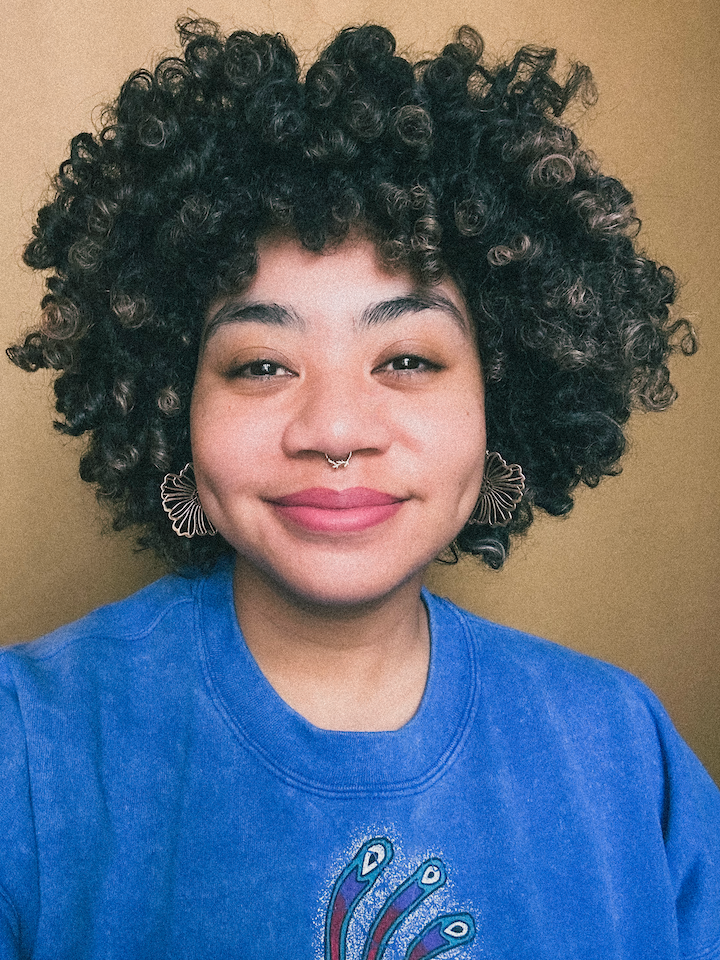
Sandy Gordon, LMFT is a depth-oriented psychotherapist in Pasadena, California, working with artists and creatives navigating burnout, life transitions, relational trauma, childhood wounds, and disconnection despite external success.
When you're overwhelmed or feeling trapped by emotions you don't know how to work with, Sandy brings skills, creativity, and deep attunement to help you slow down enough to make contact with what actually matters.
She believes therapy is not about giving you answers or fixing you. Instead her work creates conditions where you can access what's already within you but feels unreachable: your own wisdom, your clarity, your agency.
Sandy's approach draws from EMDR and Emotionally Focused Therapy, but her practice is grounded in something older: the understanding that real healing happens in relationship, over time, with patience and presence. As a Black queer therapist of Ghanaian and Mexican heritage, she holds the human need to be witnessed, held, and seen in our fullness.
This isn't about overpromising transformation or selling you quick fixes. It's about offering skilled presence for profound work: integrating experiences, reconnecting with yourself, and developing capacity to hold what life brings. Some sessions you'll leave with clear next steps. Other times, you may leave feeling more grounded, more connected, more able to sit with complexity.
And for the right people, those ready for depth, willing to feel, and seeking more than surface-level bandaids, it can be genuinely life-changing. If you’re feeling called this season to engage in this kind of work, please don’t hesitate to reach out.
